Introduction
In the world of construction and landscaping, versatility and efficiency are paramount. Mini wheel loaders and skid steers are renowned for their agility and ability to navigate tight spaces, making them indispensable tools on job sites of all sizes. However, their true potential is unlocked when equipped with the right attachments. These attachments expand their capabilities, allowing them to tackle a wide range of tasks with precision and efficiency. In this comprehensive guide, we’ll explore the common attachments available for mini wheel loaders and skid steers and how they enhance functionality.

Telescopic Wheel Loader – EVERUN ER2500F
Common Attachments for Mini Wheel Loaders and Skid Steers
- Bucket Attachments
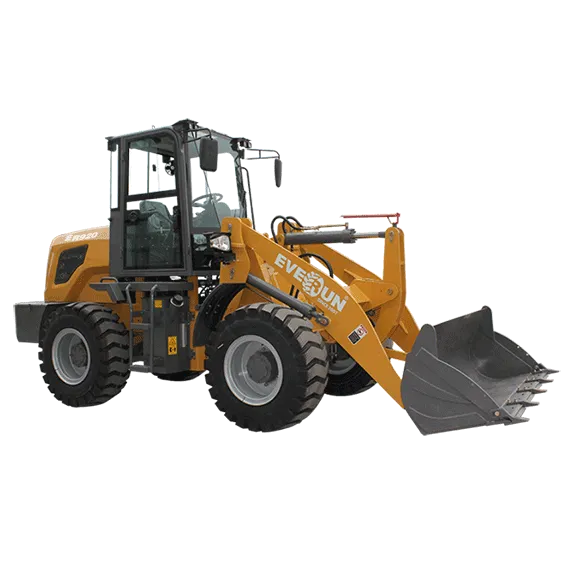
Bucket attachments are perhaps the most common and versatile attachments for mini wheel loaders and skid steers. They come in various types to suit different applications.
General purpose buckets are ideal for scooping and transporting loose materials such as dirt, gravel, and mulch. Their design allows for efficient loading and dumping, making them essential tools for landscaping, construction, and agricultural tasks.
High-capacity buckets are designed for handling larger volumes of material. They feature a larger capacity than standard buckets, allowing operators to move more material with each load, thus increasing productivity on the job site.
Grapple buckets combine the capabilities of a bucket with a grapple attachment, enabling operators to pick up and transport bulky or irregularly shaped objects with ease. They are commonly used in debris removal, land clearing, and demolition applications.
- Fork Attachments
Fork attachments are indispensable tools for material handling tasks, such as loading and unloading pallets, bales, and other heavy objects.
Pallet forks are designed for lifting and transporting palletized loads. They come in various sizes and configurations to accommodate different load capacities and attachment methods, making them versatile tools for warehouses, construction sites, and agricultural operations.
Bale spears are specialized fork attachments designed for handling round or square bales of hay, straw, or other agricultural materials. They feature sturdy tines that penetrate the bale, allowing for secure lifting and transportation.
Utility forks are multi-purpose fork attachments that can be used for a wide range of tasks, including lifting and carrying materials such as lumber, pipes, and construction debris. They are highly versatile tools that can increase the efficiency of mini wheel loaders and skid steers on the job site.
- Auger Attachments
Auger attachments are essential tools for drilling holes in various types of soil and terrain. They are commonly used in construction, landscaping, and agricultural applications.
Earth augers are designed for drilling holes in soil, gravel, and other soft materials. They are commonly used for installing fence posts, planting trees and shrubs, and digging holes for retaining walls and footings.
Rock augers are heavy-duty auger attachments designed for drilling in hard or compacted soil, rocky terrain, and concrete. They feature reinforced construction and specialized cutting edges to withstand the rigors of drilling in challenging conditions.
Tree augers are specialized auger attachments designed for planting trees and shrubs. They feature a tapered design and smooth cutting edges to minimize soil compaction and root damage during the planting process.
- Hydraulic Attachments
Hydraulic attachments leverage the hydraulic power of mini wheel loaders and skid steers to perform a wide range of tasks, from breaking concrete to compacting soil.
Hydraulic breakers are powerful demolition tools used for breaking up concrete, asphalt, and other hard materials. They feature a heavy-duty construction and a high-impact piston that delivers rapid blows to the material, breaking it into smaller pieces for easy removal.
Hydraulic hammers are similar to hydraulic breakers but are designed for more precise and controlled demolition tasks. They are commonly used for chiseling, trenching, and scaling operations where accuracy and finesse are required.
Hydraulic compactors are attachments used for compacting soil, gravel, and other loose materials. They feature a vibrating plate or drum that applies pressure to the material, reducing air voids and increasing density for improved stability and load-bearing capacity.
- Brush and Landscaping Attachments
Brush and landscaping attachments are designed for clearing vegetation, grading terrain, and preparing land for landscaping and construction projects.
Brush cutters are rotary mower attachments used for clearing thick brush, tall grass, and small trees. They feature heavy-duty blades or chains that can cut through dense vegetation with ease, making them ideal for land clearing and vegetation management tasks.
Landscape rakes are attachments used for grading and leveling soil, removing debris, and preparing seedbeds. They feature adjustable tines or blades that can be angled to achieve the desired finish, whether it’s smoothing out rough terrain or removing rocks and debris.
Soil conditioners are attachments used for pulverizing and mixing soil, improving its texture and fertility for planting. They feature rotating tines or blades that break up clumps and incorporate organic matter into the soil, creating an ideal growing environment for plants and crops.
How Attachments Enhance Functionality
- Versatility
Attachments significantly enhance the versatility of mini wheel loaders and skid steers by allowing them to perform a wide range of tasks with a single machine. Instead of investing in multiple specialized pieces of equipment, operators can simply switch out attachments to adapt to different job requirements quickly.
- Efficiency and Productivity
Attachments streamline workflows and increase productivity on the job site by enabling operators to perform tasks more efficiently. For example, a mini wheel loader equipped with a bucket attachment can quickly scoop up and transport materials, while a hydraulic breaker attachment can demolish concrete structures with precision and speed.
- Cost-effectiveness
Attachments offer a cost-effective solution for expanding the capabilities of mini wheel loaders and skid steers. Instead of purchasing additional equipment for specific tasks, operators can invest in a few versatile attachments that can be used across a wide range of applications, saving both time and money in the long run.
Considerations When Choosing Attachments
When selecting attachments for mini wheel loaders and skid steers, there are several factors to consider to ensure optimal performance and compatibility with the machine.
- Compatibility with the Machine
It’s essential to choose attachments that are compatible with the make and model of the mini wheel loader or skid steer. Each machine has specific hydraulic capabilities, weight capacities, and mounting systems that must be considered when selecting attachments.
- Specific Task Requirements
Consider the specific tasks and applications for which the attachment will be used. For example, if you need to drill holes for fence posts, an earth auger attachment would be more suitable than a hydraulic breaker. Evaluate the size, weight, and operating conditions of the attachment to ensure it meets the demands of the job.
- Durability and Quality
Invest in high-quality attachments that are built to withstand the rigors of heavy-duty use. Look for attachments made from durable materials, such as hardened steel or reinforced concrete, that can withstand the forces and impacts encountered in demanding applications.
- Maintenance Needs
Consider the maintenance requirements of the attachment, including lubrication, cleaning, and regular inspections. Choose attachments that are easy to maintain and service to minimize downtime and prolong the life of the equipment.

Telescopic Wheel Loader – EVERUN ER2500
Conclusion
Attachments play a crucial role in enhancing the functionality and versatility of mini wheel loaders and skid steers. By equipping these machines with the right attachments, operators can tackle a wide range of tasks with precision, efficiency, and cost-effectiveness. Whether it’s loading and transporting materials, drilling holes, demolishing structures, or clearing vegetation, there’s an attachment available to suit every job requirement. When selecting attachments, consider factors such as compatibility, task requirements, durability, and maintenance needs to ensure optimal performance and productivity on the job site.