Equipment buyers are no longer evaluating machines only by engine power or maximum capacity.
Modern fleet decisions increasingly depend on utilization. A machine creates greater business value when it can work across several applications, access more jobsites, reduce unnecessary downtime, and remain easy for different operators to use.
This is particularly important for landscaping companies, agricultural businesses, rental fleets, warehouses, municipal contractors, and small construction firms. These customers may not need the largest loader available. They need a machine that can perform useful work in locations where larger equipment becomes inefficient.
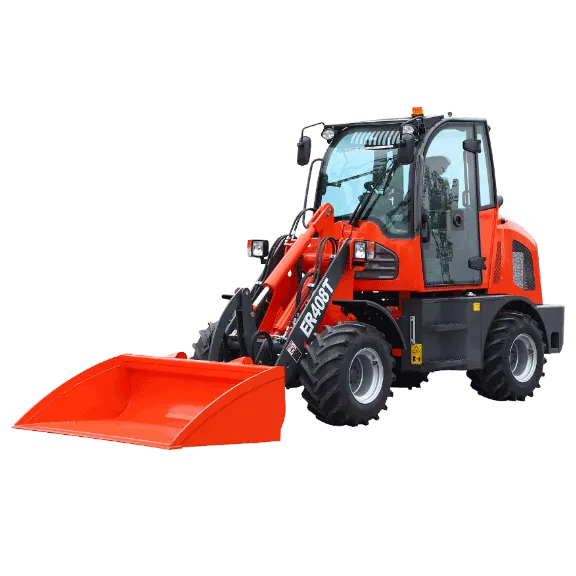
The EVERUN ERW1525E compact electric wheel loader is developed around this requirement. Its narrow design, electric four-wheel drive, articulated steering, hydraulic control, lithium battery system, and practical cab features allow one machine to support a wide variety of daily operations.
Compact Size Can Create a Competitive Advantage
A larger machine may offer greater capacity, but size can quickly become a disadvantage on a restricted jobsite.
Wide loaders may be unable to enter narrow gates, agricultural buildings, storage facilities, garden paths, pedestrian zones, or renovation areas. Even when access is possible, limited turning space may require repeated reversing and repositioning.
The ERW1525E has a machine width of approximately 1,250 mm, helping it work in locations that are inaccessible or inconvenient for conventional wheel loaders.
This compact profile is useful for:
* Greenhouses and agricultural buildings
* Warehouses and production facilities
* Landscaping paths and private gardens
* Livestock farms and feeding passages
* Municipal parks and pedestrian areas
* Indoor renovation and demolition projects
* Narrow yards and material-storage zones
For contractors, this creates an important commercial benefit. A compact loader can accept jobs that may otherwise require manual labor, several smaller machines, or specialized equipment.
Maneuverability Improves the Entire Work Cycle
Jobsite productivity is determined by more than lifting speed.
A typical loading cycle includes approaching the material, filling the bucket, reversing, turning, travelling, positioning, unloading, and returning. Inefficiency during any stage increases the total cycle time.
The ERW1525E uses articulated steering with a turning angle of approximately 45 degrees. Dual steering cylinders support smooth steering response and directional stability.
This design can help the operator approach materials at a better angle and turn in restricted areas with fewer corrections.
On a busy jobsite, the benefit is cumulative. Saving several seconds during one cycle may appear minor, but the same movement may be repeated throughout the day. Reduced manoeuvring can mean more completed loads, less operator frustration, and more efficient use of working time.
A Useful Balance of Weight and Loading Performance
The ERW1525E weighs approximately 2.75 tonnes, while its maximum loading capacity is listed as a 1,500 kg tipping load.
This does not make it a replacement for a large production loader, nor is that its intended role.
Its strength lies in combining useful loading performance with a compact platform. The machine is suitable for materials and tasks that are too demanding for manual handling but do not require oversized construction equipment.
Examples include moving soil, mulch, sand, gravel, animal feed, bedding, fertilizer, green waste, snow, packaged supplies, and other general materials.
The maximum lifting height at the shovel pivot pin is approximately 2,490 mm, allowing the loader to support common loading, stacking, transportation, and material-positioning tasks.
Fleet buyers should always match the machine configuration, bucket, attachment, operating surface, and load requirements to the specific application.
Separate Power for Travel and Working Functions
Electric machinery must provide consistent performance during both travel and hydraulic operation.
The ERW1525E uses a dual-motor configuration, with a 20 kW driving motor and a 13 kW working motor. This arrangement separates propulsion requirements from hydraulic working functions.
The driving motor supports machine movement, while the working motor supplies power for lifting, tilting, and other hydraulic operations.
For the operator, this means that the loader can respond effectively during different phases of the work cycle. The machine can travel between loading locations, position itself accurately, and operate the bucket or attachment without relying on a traditional diesel drivetrain.
Electric four-wheel drive with a cardan shaft helps distribute driving force, while electronic axle differential locks support traction when operating conditions become more demanding.
Hydraulic Precision Reduces Corrective Movements
A productive loader must be easy to control.
The ERW1525E features a hydraulic joystick that gives the operator direct control over working functions. Smooth lifting and tilting movements are valuable when working around buildings, vehicles, fences, storage racks, plants, livestock, or pedestrians.
Better control may reduce the need to stop and reposition the machine after an inaccurate movement.
This is especially helpful during:
* Pallet and supply handling
* Loading feed into agricultural equipment
* Positioning landscaping materials
* Clearing waste inside buildings
* Loading small trailers
* Moving materials close to walls
* Working in customer-facing urban areas
The loader also includes an electric floating function, which can support operations where the working attachment needs to follow the ground surface more consistently.
Battery Features Designed Around Real Work
The ERW1525E uses a 64V/324Ah lithium battery system.
According to the official specifications, working time is approximately four to six hours, while the listed charging period is approximately eight to ten hours. Actual operating time will depend on load weight, hydraulic usage, travel distance, ground conditions, temperature, attachment type, and operator behaviour.
The machine includes a battery management system, energy recovery, and an Eco mode designed to extend available operating time.
These features allow fleet managers to plan the loader around realistic duty cycles. For example, the machine can be assigned to indoor material handling during the day and charged overnight. Rental companies may also position it for short-shift projects, urban work, indoor contracts, and customers with planned charging access.
Rather than treating battery duration as an isolated number, buyers should compare it with their actual working pattern.
Practical Cab Features for Different Operators
Rental fleets and multi-operator businesses need machines that are straightforward to understand and comfortable to use.
The ERW1525E includes a modern cab interior with an HD LED display and a rear-view camera. An electronic parking brake, wet service brakes, hydraulic joystick, and clearly arranged operating functions support everyday usability.
The electric tipping cabin also provides more convenient maintenance access.
These features are important because equipment utilization depends on operator acceptance. A machine that is difficult or uncomfortable to operate may remain unused even when it is technically capable of completing the job.
A clear display, improved rear visibility, responsive steering, and logical controls can help different operators become familiar with the machine more quickly.
Applications Across Agriculture, Landscaping, Warehousing, and Municipal Work
The ERW1525E can support several industries rather than being restricted to a single specialist application.
On farms, it can move feed, bedding, fertilizer, pallets, and general materials. Landscaping businesses can use it for soil, mulch, paving products, compost, tree-care waste, and site preparation.
Warehouses and production facilities may deploy it for material transportation, waste removal, yard work, and operations in partially enclosed areas.
Municipal contractors can apply it to park maintenance, street cleaning, snow removal, waste handling, and work in urban zones where machine dimensions and on-site exhaust emissions are important considerations.
Construction and renovation contractors can use the ERW1525E for light loading, debris movement, and supply transportation on space-limited sites.
With suitable attachments, the same machine can move between different tasks, improving annual utilization.
Why the ERW1525E Matters to Dealers and Rental Companies
For dealers, a successful product must solve a recognizable customer problem.
The ERW1525E addresses several: restricted access, demand for electric equipment, multi-industry use, operator convenience, and the need for a compact machine with meaningful loading performance.
It can be offered to existing wheel-loader customers who want to add an electric model, as well as new buyers entering the compact equipment market.
Rental companies may benefit from its broad application range. One ERW1525E can potentially serve agricultural, landscaping, warehouse, municipal, property-management, and light-construction customers.
This creates more opportunities to keep the machine working instead of waiting for one narrow type of project.
A Compact Loader Built for Broader Opportunities
The EVERUN ERW1525E is not simply a diesel loader with the engine removed.
Its electric drive, compact dimensions, articulated steering, dual-motor system, four-wheel drive, energy-management functions, and operator-focused controls form an equipment package designed for changing jobsite requirements.
For end users, it provides access, flexibility, and useful material-handling performance. For dealers and rental companies, it creates an opportunity to serve customers looking for practical electric machinery rather than oversized equipment.
As electric equipment adoption expands, machines that can work across several industries are likely to create the greatest fleet value.
Looking for a compact electric loader with multi-industry potential?
Contact EVERUN for ERW1525E specifications, product availability, dealer cooperation, OEM opportunities, or distribution support in your market.